The morning after a severe hailstorm, straight-line wind event, or tropical squall, most neighborhoods wake up to scattered tree branches, dented gutters, and anxious uncertainty about what happened overhead. Within hours—sometimes even before utility crews have finished clearing downed lines—unfamiliar pickup trucks and white vans begin cruising slowly down residential streets. Clipboards in hand, door-to-door salespeople knock on front doors offering free roof inspections, steep same-day discounts, and promises to handle your entire insurance claim without costing you a dime.
While legitimate contractors work hard to help communities recover from weather disasters, major storms also attract transient operators known throughout the industry as storm chasers. These out-of-town crews follow severe weather radar maps across state lines, rush through subpar work using cheap materials, collect large insurance checks, and vanish long before the first heavy rain reveals leaking flashing or voided manufacturer warranties.
Knowing how to spot these deceptive tactics before signing any paperwork protects both your home and your finances. Below is an in-depth, practical guide to recognizing front-door red flags, verifying contractor credentials independently, avoiding dangerous insurance and contract traps, and navigating post-storm recovery safely.
Recognizing Common Door-to-Door Storm Chaser Tactics
Spotting High-Pressure “Today-Only” Discounts and Leftover Material Claims
Predatory salespeople rely heavily on artificial urgency to prevent homeowners from comparing estimates or consulting family members. One of the oldest scripts in the storm-chaser playbook involves claiming they are currently finishing a project down the street and have leftover shingles or flashing materials they can install on your home at a steep discount—provided you sign an agreement before they leave your porch.
Established local roofers order materials precisely measured for each individual residence and never carry enough extra bundles on a truck to reroof a neighboring house at half price. Anytime a salesperson pressures you to sign on the spot, warns that your insurance claim window will expire within 24 hours, or refuses to leave a written estimate behind for you to review privately, close the door politely and move on.
Guarding Against Unsupervised Roof Access and Manufactured Damage
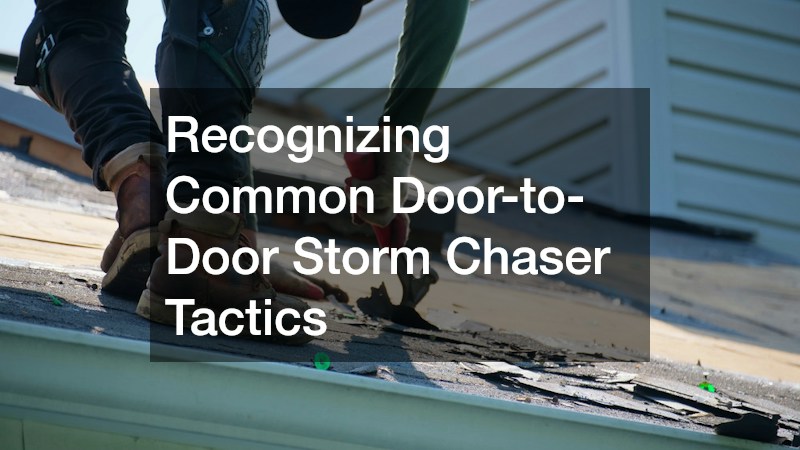
Never allow an uninvited stranger to climb a ladder onto your roof while you wait inside the house. Law enforcement agencies and state insurance fraud bureaus routinely document cases in which dishonest crews use ball-peen hammers, coins, or pry bars to manufacture fake hail dents on soft metal vents and deliberately tear or crease healthy shingles out of sight. Once back on the ground, they show staged smartphone photos to convince the homeowner that emergency work is urgent.
If you suspect storm damage after high winds or hail, start by walking around your yard with binoculars or zooming in with your smartphone camera from ground level. Look for dented aluminum downspouts, bruised patio furniture, torn ridge caps, or piles of asphalt granules washing out of gutter elbows. Then invite vetted roofers of your own choosing—and watch from the yard or request timestamped video footage during any physical inspection.
Questioning Out-of-State Plates, Magnetic Truck Signs, and Temporary Offices
Pay close attention to the vehicles and printed materials a canvasser brings to your neighborhood. Legitimate community businesses invest in permanently lettered company trucks, local phone numbers with regional area codes, and verifiable street addresses. Be cautious if you notice these classic transient warning signs:
- Out-of-state license plates paired with generic rental trucks or unmarked vans
- Newly printed magnetic door decals slapped onto truck doors rather than permanent vinyl graphics
- Business cards listing only a P.O. box, a temporary motel address, or a brand-new toll-free number
- Flyers featuring generic stock photos of storm damage rather than real local projects and verifiable community references
Verifying Contractor Credentials, Licensing, and Insurance
Confirming State Licensing, Bonding, and Physical Business Addresses
Before allowing any company to inspect your roofline or draft a proposal, take ten minutes to verify their legal standing. Most states and many municipalities require roofing companies to hold active state contractor licenses, specialty trade registrations, or surety bonds before pulling building permits. Ask for their exact legal business name and license number, then look them up directly on your state licensing board’s public database rather than relying on a photocopy handed to you at the door.
Equally important is verifying how long the business has operated in your region. Experienced residential roofers maintain physical offices, supply yards, or showrooms within driving distance of your neighborhood—meaning they will still be easy to reach three or five years from now if a warranty question ever arises. Checking the local Secretary of State business registry confirms when the company was formed and whether its corporate status is active and in good standing.
Validating General Liability and Workers’ Compensation Certificates Directly
Roofing is consistently ranked among the most hazardous construction trades, making proper insurance verification non-negotiable for homeowners. If an uninsured worker falls from your roof or drops heavy materials onto a neighbor’s vehicle, you could be held personally liable for medical bills and property damage.
Ask every prospective company for a current Certificate of Insurance (COI) listing both general liability coverage and workers’ compensation insurance. Do not simply glance at the piece of paper—call the insurance agency listed on the certificate directly and ask them to email an updated COI showing your name as the certificate holder. Confirming coverage directly with the insurer takes five minutes and eliminates the risk of forged or expired policy documents.
Checking Manufacturer Certifications and Independent Review Histories
Major shingle and roofing system manufacturers—such as GAF, Owens Corning, CertainTeed, and Malarkey—award factory-certified credentials only to contractors who pass strict background checks, maintain strong credit and insurance records, and complete ongoing installation training. Hiring a factory-certified roofing contractor also qualifies your home for enhanced manufacturer workmanship warranties that remain valid even if the installer eventually retires.
When researching online reviews across Google, the Better Business Bureau, and local neighborhood forums, look closely at review dates rather than overall star ratings alone. Storm chasers frequently hire reputation agencies to post dozens of glowing five-star reviews within a single seven-day window right after a major hailstorm. Authentic community companies display steady, detailed customer reviews stretching back across several years, along with thoughtful responses to any past customer concerns.
Identifying Insurance Fraud and Contract Red Flags
Refusing Offers to “Waive” or “Absorb” Your Insurance Deductible
One of the clearest signs of an unethical operator is a promise to “waive,” “absorb,” or “pay” your homeowners insurance deductible—often disguised as an advertising yard-sign rebate or promotional discount. Under state insurance laws across nearly the entire country, waiving a deductible or submitting an inflated invoice to your insurance carrier so the insurer unknowingly covers your deductible constitutes felony insurance fraud.
Both the contractor and the homeowner can face criminal prosecution, civil fines, and immediate policy cancellation for participating in deductible-waiver schemes. Legitimate roof replacements require transparent, accurate invoicing that matches the true scope of work approved by your insurance adjuster, with the homeowner paying their contractual deductible directly.
Insisting on Itemized Scopes of Work Before Authorizing Any Fix
Whether your storm claim covers targeted roof repairs or a complete tear-off, every legitimate contract should spell out exact materials, installation methods, and cleanup responsibilities in plain language before work begins. Never accept a one-line proposal that simply reads “Install new roof per insurance scope.”
Verify that your written agreement clearly specifies each of the following components:
- Full tear-off vs. overlay: Confirm whether all existing shingle layers will be removed down to the bare wood decking so rotten sheathing can be inspected and replaced.
- Underlayment and ice-and-water barrier: List exact synthetic underlayment brands and confirm self-adhering ice-and-water membrane coverage along eaves, valleys, and penetrations per local building code.
- Flashing and drip edge replacement: Specify new metal drip edges along eaves and rakes, new step flashing along sidewalls, and new pipe boots rather than reusing worn, storm-battered metal.
- Ventilation specifications: Detail ridge vents, intake soffit vents, or balanced airflow calculations so trapped attic heat does not void your new shingle warranty.
- Property protection and cleanup: Outline tarping for landscaping and air conditioning units, dumpster placement rules, and thorough magnetic nail sweeping across driveways and lawns.
Evaluating Estimates, Materials, and Specialized Repairs
Comparing Multiple Written Bids on Material Specs Rather Than Price Alone
Even when your insurance company sets an initial Replacement Cost Value (RCV) scope, collecting at least three detailed written estimates from vetted companies helps you spot cut corners immediately. If two reputable estimates sit within 10% of each other while a third bid comes in thousands of dollars lower, examine the low bid line by line to see what was left out.
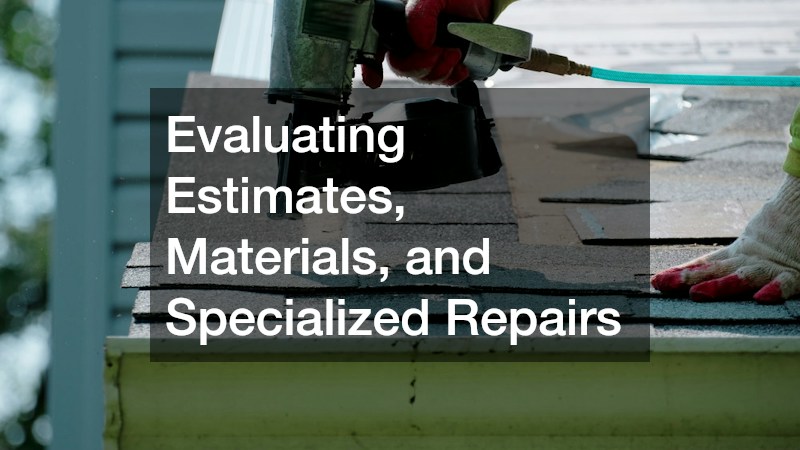
Dishonest crews frequently undercut honest pricing by omitting starter strips, installing thinner three-tab shingles instead of architectural dimensional shingles, skipping valley metal, or using only four nails per shingle instead of the six-nail high-wind pattern required by manufacturer specifications. Comparing itemized specs ensures you invest in a durable system built to withstand the next severe storm.
Checking Material Warranties and Specialty System Qualifications
Severe hail and wind events also prompt many homeowners to upgrade from standard asphalt shingles to impact-resistant Class 4 shingles or standing-seam steel panels. Because architectural metal systems require specialized panel-seaming tools, thermal expansion clips, and custom flashing fabrication, never assume an everyday shingle crew can install metal panels properly.
If you are considering a metal upgrade, interview an experienced metal roofer with verifiable local installations and separate manufacturer certifications for standing-seam or stone-coated steel systems. Improperly fastened metal panels can oil-can, leak around fasteners, or tear loose during high-wind gusts, voiding expensive 40- or 50-year material warranties.
Inspecting Soffits, Vents, and Attics for Storm-Related Wildlife Entry
High winds and pelting hail often damage more than just field shingles—torn aluminum fascia, cracked plastic gable vents, and dislodged soffit panels create immediate openings along your roofline. During late winter, spring, and autumn storm seasons, squirrels and other attic pests quickly exploit storm-damaged eaves to build warm nests inside attic insulation.
Before sealing up damaged soffits or installing new ridge vents, inspect your attic thoroughly for chewed wiring, displaced insulation, or animal droppings. If critters have already moved inside through wind-torn eaves, coordinate with a local squirrel removal service to humanely evict the animals and install one-way exclusion doors before your roofing crew permanently closes the roofline—preventing trapped animals from chewing back through brand-new fascia boards.
Following Safe Payment Practices and Post-Storm Recovery Steps
Having Your Chosen Inspector Meet the Insurance Adjuster On-Site
Once you have chosen a trustworthy contractor and filed your storm claim, ask your project manager to attend the insurance adjuster’s on-site roof inspection. Having an experienced estimator walk the roof alongside the adjuster ensures subtle wind-creased shingle tabs, lifted seal strips, damaged ridge vents, and soft wood decking are accurately documented in the initial claim estimate.
Unlike storm chasers who aggressively argue with adjusters or demand unnecessary upgrades, ethical contractors stick strictly to factual photographic evidence and local building code requirements—helping your claim move smoothly without unnecessary friction or delays.
Conducting a Final Walkthrough and Collecting Warranty Documentation
Before issuing your final payment check, conduct a thorough daytime walkthrough with your project supervisor both on the ground and inside your attic. Check that flashing around chimneys and skylights sits flush, ridge caps run straight, gutters are free of loose granules and debris, and magnets have cleared stray roofing nails from grass, flower beds, and driveways.
Finally, collect a complete closeout packet containing your paid-in-full receipt (which your insurer will need to release recoverable depreciation funds), signed municipal permit sign-off, supplier lien waivers, your contractor’s written workmanship warranty, and registered manufacturer warranty certificates confirming proper roof installation. Keeping this documentation organized protects your coverage and adds documented resale value for future roof replacements or home appraisals.
Protecting Your Home Through Calm, Informed Decisions
Severe storms create genuine stress, and dishonest storm chasers count on urgency and confusion to push homeowners into rushed decisions. Remembering a few core safeguards keeps you firmly in control: never sign a contract on your front porch, never allow uninvited strangers onto your roof unsupervised, verify state licensing and insurance certificates directly, reject any offer to waive your deductible, and tie every payment strictly to verified milestones.
Taking an extra day or two after a storm to compare written estimates from established community professionals will never jeopardize a legitimate insurance claim—and it can save you tens of thousands of dollars in botched repairs and voided warranties. Keep this checklist in your home emergency folder, document storm damage safely from the ground with dated photos, and partner only with transparent professionals who stand behind their work long after the skies clear.
About the Author