Maintaining a home requires balancing immediate living needs with the long-term protection of the building envelope and internal systems. While interior decorative finishes often capture the most attention during initial moves or renovations, real property resilience depends on the structural surfaces and mechanical pathways that keep the elements at bay. Minor oversights—such as ignoring slightly lifted roof flashing or dismissing small cracks in exterior wall cladding—often escalate into extensive rot, structural instability, and steep emergency costs. Developing a clear understanding of routine property inspections and recognizing when professional intervention is required forms the bedrock of responsible homeownership.
Inspecting Roofs and Repairing Damaged Flashing
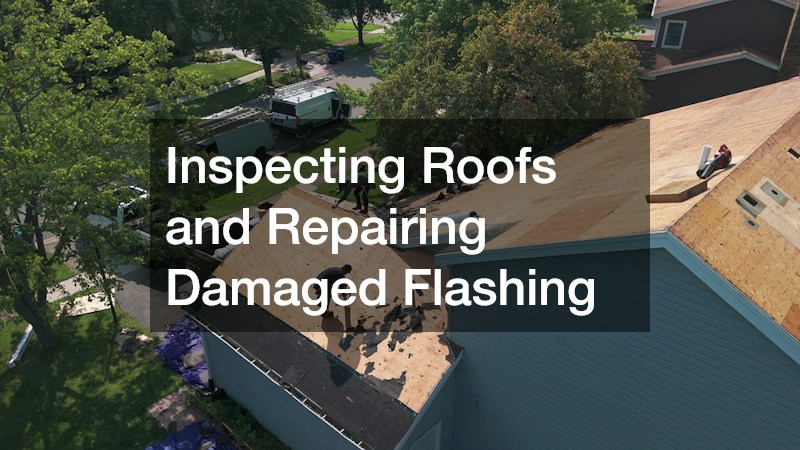
The primary defense of any residence begins at the roofline, where weatherproofing materials must endure solar radiation, high winds, and heavy precipitation year after year. Typical asphalt shingles gradually lose their protective mineral granules, which leaves the underlying fiberglass and asphalt matting vulnerable to cracking, curling, and thermal tearing. Regular ground-level checks using binoculars or careful evaluations from a securely placed ladder can help spot missing shingle tabs, storm bruising, and early signs of moss accumulation that can lift shingles and trap standing water against the roof deck.
While degraded shingles are easy to identify, the vast majority of severe structural leaks originate around roof transitions and penetrations rather than open shingle fields. Metal flashing installed around brick chimneys, soil vent stacks, skylight curbs, and intersecting roof valleys expands and contracts with ambient temperature shifts, which can break dried sealants and pull fasteners out of framing. When moisture slips behind compromised valley metal or rusted step flashing, it runs along rafters and can saturate attic insulation for months before water stains show up on finished ceilings. Partnering with a vetted
roofing company ensures that damaged flashing assemblies are properly rebuilt, underlying water barriers are restored, and high-risk roof penetrations are sealed without voiding material warranties.
Sealing Exterior Siding and Preventing Moisture Infiltration
Directly beneath the roof overhangs, exterior wall cladding serves as the vertical barrier protecting wood studs, structural sheathing, and wall cavity insulation from driving winds and rain. Siding materials undergo steady thermal expansion and contraction cycles throughout changing seasons, which can eventually warp vinyl panels, cause fiber-cement boards to pull away from fasteners, or open hairline cracks in traditional wood shakes. Left unmanaged, these minor exterior openings allow wind-driven rainwater to penetrate beneath the siding surface, where it can deteriorate moisture barriers and rot structural wall framing out of sight.
Preventing deep structural moisture damage demands an organized inspection of exterior joints, window jambs, and horizontal seams at least once a year. Homeowners should look for loose perimeter trim, degrading window caulking, and bubbling exterior paint, as these symptoms typically point to moisture trapped behind the cladding. For significant buckling, storm impacts, or widespread panel separation, working with a licensed siding contractor guarantees that damaged sections are properly removed and replaced.
Grading Perimeter Soils and Improving Foundation Drainage

The relationship between native soil topography and foundation performance is one of the most critical structural balances across any residential property. When rainwater and seasonal snowmelt cascade off roof surfaces, the natural grade immediately surrounding the building must actively direct moisture away from concrete stem walls and footing pads. Over time, recurring wet-weather events, organic matter breakdown, and secondary settling can invert this baseline slope, leading to negative grading where surface water flows backward toward the basement or crawlspace walls. Water pooling against concrete creates hydrostatic pressure, which forces dampness, moisture vapor, and mineral efflorescence through microscopic capillaries in masonry, eventually triggering foundation settling and basement leaks.
Remediating these structural grading issues requires physical earth moving, subsoil profiling, and hydrological management. Property owners can inspect their exterior perimeter after heavy downpours to spot standing puddles, eroded flowerbed borders, and settling around downspout exit lines. When minor adjustments to topsoil are not enough to resolve water accumulation along long foundation runs, partnering with professional
landscaper services provides access to the equipment and expertise needed to reconstruct positive yard slopes. Experienced crews can excavate shallow swales, install catch basins tied to buried PVC discharge piping, and introduce dense, permeable gravel corridors that relieve water pressure against footings while protecting finished turf aesthetics.
Pruning Mature Trees and Managing Hazardous Canopies
A well-established canopy of shade trees brings immense ecological value, summer cooling, and visual character to a residential setting. However, as trees mature, their physical weight, structural wind resistance, and natural decay cycles can turn overhead limbs into hazards. Heavy storms, saturated soil conditions, and sudden high winds put stress on older wood, especially branches that extend directly over rooflines, electrical drop lines, and vehicle parking bays. Beyond storm damage, unpruned canopies block natural sunlight, which traps continuous moisture on roof shingles and provides a direct path for pests to access attic eaves.
Effective canopy stewardship requires routine inspections to catch deadwood, fungal growth, trunk hollows, and competing codominant stems before severe weather tests their strength. Property owners should watch for split crotches, dying upper limbs, and any growth hanging within ten feet of structural walls and chimneys. Safely addressing these overhead hazards demands specialized rigging, aerial lifts, and sectional dismantling, which is why scheduling certified tree trimming services is essential.
Servicing Garage Doors and Balancing Tension Springs
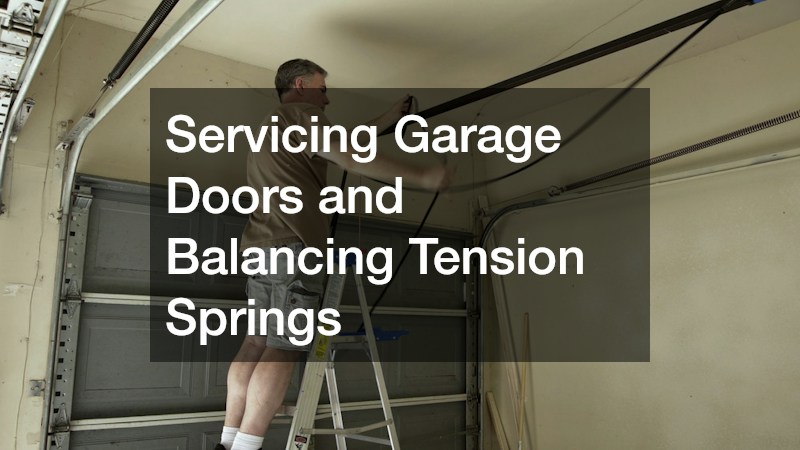
The mechanical entry point of an attached workshop or storage bay represents the largest, heaviest dynamic component in any residential structure. Operating multiple times per day across changing weather conditions, this overhead portal relies on a delicate balance of track alignment, high-torque counterbalance hardware, and calibrated lifting cables. When the system falls out of equilibrium, the motor drive is forced to handle excess deadweight, leading to accelerated gear wear, snapped internal drive belts, and off-track panels that leave the building exposed to weather and intruders. Property owners should visually check roller tracking, test auto-reversal safety eyes with an obstruction, and clear steel channels of debris to prevent premature mechanical strain.
Despite the accessibility of minor track cleaning and hinge lubrication, serious hardware maintenance requires extreme caution due to the immense potential energy stored in the lifting mechanics. Torsion springs mounted across the header pipe are wound under severe torque, and an accidental release of that kinetic energy can cause catastrophic structural damage or severe personal injury. When cables show signs of fraying,
bottom brackets rust through, or a spring splits down the coil, attempting a DIY replacement poses significant safety hazards. Scheduling professional service for your overhead
garage door guarantees that springs are calculated precisely to door weight,
track geometry is trued within millimeter tolerances, and the manual disconnect assembly operates reliably during power outages.
Maintaining Septic Systems and Preventing Drain Backups
For properties situated beyond municipal wastewater districts, on-site sanitation systems provide indispensable biological processing and liquid absorption. A standard residential setup channels all household graywater and blackwater into an underground chamber, where anaerobic bacteria separate the flow into settling bottom sludge, clarified middle liquid, and floating surface scum. The treated liquid then drains into a subterranean absorption field, where native soil microbes complete the natural filtration process. Because this entire infrastructure remains buried and out of sight, homeowners frequently overlook maintenance until slow drains, gurgling plumbing stacks, or soggy, odor-heavy lawn surfaces signal an active system failure.
Protecting this underground utility requires consistent operational discipline and routine professional care. Homeowners should never treat toilets or sinks as trash receptacles; items such as flushable wipes, grease,
paper towels, and harsh chemical solvents kill the beneficial bacteria needed to break down solids, causing rapid filter blockages. When solid matter bypasses tank baffles and enters the drainage gravel, it forms an impermeable layer of biomat that suffocates soil absorption and forces wastewater back into household drains. Calling in a qualified technician for
local septic tank repair allows you to restore broken inlet baffles, replace cracked distribution boxes, and pump accumulated sludge before it permanently ruins the absorption area and forces a costly system replacement.
Optimizing Air Conditioning and Restoring Airflow Balance
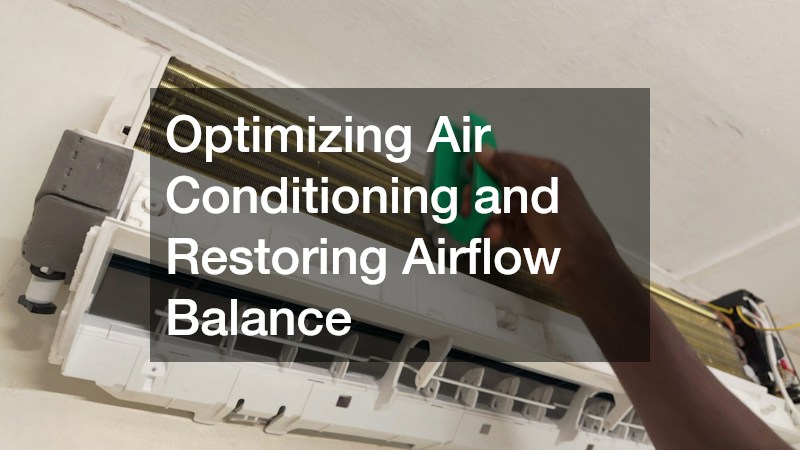
Modern climate control systems provide far more than simple temperature relief; they serve as the primary mechanism for moisture extraction, indoor air cycling, and particulate filtration throughout the warmer months. When an cooling unit functions correctly, it strips latent humidity from ambient room air while distributing balanced, chilled air through the entire network of supply ducts. Over consecutive cooling cycles, however, thermal efficiency degrades as heat-transfer components become insulated by airborne dust, lawn clippings, and pet dander. Property owners can monitor baseline performance by checking the temperature differential between supply registers and return grilles, which should consistently hover between a fifteen and twenty-degree spread, while regularly swapping out clogged air filters to avoid choking return airflow.
When a system runs continuously without reaching the thermostat setpoint, blows lukewarm air, or causes the indoor evaporator coil to freeze into a solid block of ice, the underlying cause usually points to deeper electrical or thermodynamic failures. Restricted refrigerant lines, failing run capacitors, and pinhole evaporator leaks prevent proper heat absorption, placing immense stress on the hermetic compressor motor until it overheats and trips the main breaker. Reaching out to professional
ac repair services ensures that technicians can connect digital pressure gauges, calculate exact superheat and subcooling metrics, and clear clogged condensate drain pans before overflow switches shut the unit down or cause ceiling leaks. Qualified specialists also have the nitrogen testing tools to pinpoint micro-fractures in copper lines, recharge refrigerant blends to exact factory weights, and straighten bent condenser fins to restore smooth airflow across the outdoor coil.
Repairing Central Heating and Servicing Ductwork Components
A reliable central heating system is fundamental to household comfort and winter structural safety, keeping interior plumbing pipes from freezing during severe cold snaps. Whether powered by natural gas, propane, heating oil, or electric heat strips, forced-air furnaces rely on a coordinated sequence of safety controls, ignition modules, and high-output blower assemblies. As heating systems age, vibration and thermal expansion loosen structural sheet-metal joints, leading to conditioned air leaking into unconditioned crawlspaces and attics. Homeowners can conduct basic seasonal maintenance by vacuuming dust around the furnace cabinet, ensuring supply vents remain unobstructed by furniture, and replacing disposable air filters before the first frost arrives.
Despite straightforward homeowner care, the internal combustion process demands rigorous mechanical precision to prevent life-threatening hazards like carbon monoxide migration and burner back-drafting. Cracked heat exchangers, dirty flame sensors, sticking gas valves, and failed draft-inducer motors can prevent ignition sequences from completing or cause burners to shut off unexpectedly under limit-switch lockouts. Scheduling comprehensive HVAC repair gives you access to specialized technicians who can measure manifold gas pressures, inspect the heat exchanger using fiber-optic cameras, verify flue draft venting, and balance internal blower speeds. Certified heating specialists also use pressure manometers to measure static duct pressure, sealing trunk-line gaps with durable mastic to guarantee that warm air reaches every room evenly without wasting energy.
Filtering Domestic Water and Softening Mineral Build-Up
Potable water serves as the foundation of daily household life, influencing everything from the longevity of plumbing fixtures to personal hydration and cooking. However, incoming domestic water supplies—whether sourced from municipal utilities or private aquifers—rarely enter the home completely free of impurities. Municipal lines often introduce disinfection byproducts, residual chlorine, and microscopic rust flakes dislodged from aged transit mains. Meanwhile, private groundwater commonly carries elevated levels of dissolved calcium, magnesium, iron, and sediment. Over extended periods, hard water leaves stubborn scale deposits inside copper pipes, restricts showerhead orifices, coats water heater elements in heat-trapping crust, and leaves persistent white etching on glass shower doors and dishware.
Establishing reliable water purity requires a comprehensive treatment strategy capable of addressing both particulate contamination and dissolved mineral hardness. Homeowners can begin by conducting an independent laboratory test to analyze their water for total dissolved solids, heavy metals, microbial presence, and grains per gallon of hardness. Installing an engineered
home water filtration system provides whole-property defense at the main shutoff valve before water ever enters interior plumbing branches. A high-capacity multi-stage setup pairs sediment pre-filters and activated catalytic carbon blocks to remove bad tastes, chemical residues, and volatile organic compounds, while an integrated ion-exchange water softening unit swaps out calcium and magnesium ions for sodium or potassium, protecting plumbing infrastructure and extending the lifespan of modern appliances.
Sweeping Fireplace Flues and Sealing Chimney Dampers
A traditional masonry hearth or high-efficiency wood-burning appliance offers essential auxiliary heating during winter cold snaps and serves as the visual centerpiece of a living space. Yet, combustion heating introduces inherent fire and air-quality hazards if the exhaust pathways are neglected. As firewood burns, it releases volatile gases, unburned hydrocarbons, and moisture that rise up the chimney structure. When these hot exhaust vapors hit cold exterior masonry or uninsulated flue liners, they condense along the inner walls, forming dense layers of creosote. Left to accumulate across multiple heating seasons, this tar-like byproduct hardens into a combustible glaze that can ignite under intense flue temperatures, triggering aggressive chimney fires capable of spreading directly into structural roof framing.
Maintaining a safe, efficient burn requires consistent operational discipline, proper cordwood seasoning, and regular structural venting evaluations. Homeowners should only burn split hardwoods that have been dried to an internal moisture level below twenty percent, as damp wood creates heavy, creosote-laden smoke and robs the fire of thermal output. Scheduling an annual
fireplace service ensures that the entire venting system is mechanically cleared of flammable soot using specialized rotary rods and industrial HEPA vacuums. A trained chimney technician can also use drop-down video cameras to inspect flue tiles for hairline fractures, verify that refractory brick joints inside the firebox are sealed, replace deteriorating top-mount chase covers, and ensure that throat damper assemblies seal tightly to prevent heated indoor air from escaping up the stack when the hearth is cold.