Key Takeaways
- Permanent windbreaks are the most reliable long-term defense against gusts that can shred leaves, snap stems, and uproot young trees.
- Living barriers made of trees and shrubs offer cooling, wildlife habitat, and soil retention, while structural fences give immediate protection but need more maintenance.
- A well-placed barrier can shield a downwind area many times taller than the barrier itself, making height and placement the two most important design choices.
- Semi-permeable windbreaks that let roughly 40 to 50 percent of air pass through outperform solid walls, which create damaging turbulence on the sheltered side.
- Multi-row plantings combining tall evergreens, mid-height shrubs, and low ground cover deliver layered, year-round defense.
- Site assessment, prevailing wind direction, and spacing between barriers determine whether an installation succeeds or fails within a few seasons.
- Combining living and built elements often outperforms either option used alone, especially on exposed or coastal properties.
Gardens look peaceful until the wind picks up. Then branches snap, tomato cages topple, and newly planted saplings lean sideways by morning. For anyone who has spent a weekend replanting what a gust destroyed overnight, the appeal of a permanent solution is obvious.
The challenge is that there are several permanent options, and they do not all perform the same way. A row of arborvitae behaves nothing like a slatted cedar fence. A hedge of junipers protects differently than a mixed-species shelterbelt. Choosing between them means weighing cost, aesthetics, maintenance, and raw aerodynamic performance.
This article compares the main permanent windbreak approaches side by side, so you can match the right barrier to your yard, your climate, and your long-term goals.
Why Wind Does So Much Damage in the First Place

Wind is sneaky. A ten-mile-per-hour breeze feels pleasant and actually helps plants develop sturdier stems. But cross a certain threshold and the same air current turns destructive. According to the UC Marin Master Gardeners, most plant damage begins once winds climb above 30 miles per hour, which is well within the range of a typical thunderstorm or coastal afternoon.
The damage is not only mechanical. Strong wind strips moisture from leaves faster than roots can replace it, causing a slow dehydration gardeners often blame on drought. Add salt spray near the coast or dust in agricultural regions, and the leaf surface takes a beating from both abrasion and desiccation.
That is why thinking about long-term defenses matters more than any single season of mulching, staking, or last-minute pre-storm yardwork. A permanent windbreak keeps working during every storm for decades.
Living Windbreaks Versus Built Structures
The first big decision is whether your barrier should be alive or constructed. Both work. They just work differently, and the choice shapes everything that follows, from how much digging you do this weekend to what your yard looks like in twenty years.
Living windbreaks, meaning rows of trees and shrubs, are the gold standard for large properties and rural lots. They grow denser over time, filter wind rather than block it, and provide habitat and shade. A well-designed shelterbelt might combine a tall outer row of evergreens like Norway spruce or Eastern red cedar with a middle row of deciduous trees and an inner row of dense shrubs such as viburnum or ninebark. That layered structure slows wind across a vertical gradient, which is far more effective than a single wall of foliage. Built structures like louvered fences, lattice panels, and masonry walls deliver instant protection and take up less lateral space, which matters on a small suburban lot where every foot of growing room counts. A six-foot louvered cedar fence can start sheltering tomato beds the day it goes up, while a hedge of the same height might take five to eight years to reach full function.
Here is how the two approaches typically compare:
- Cost: Living barriers cost less to install but take years to mature; built structures cost more upfront but work immediately. Bare-root seedlings often run a few dollars each, while a run of quality fencing can easily hit $30 to $60 per linear foot installed.
- Maintenance: Trees need pruning, watering during establishment, and occasional replacement; fences need staining, repairs, and eventual rebuilding. Expect to baby young trees for the first two or three growing seasons before they can fend for themselves.
- Lifespan: A healthy shelterbelt can last 50 to 100 years; most wood fences last 15 to 25. Masonry walls split the difference, often lasting 40 to 60 years with periodic repointing.
- Aesthetics: Living hedges soften a yard; walls and fences define it. One blurs the property line, the other draws it in permanent ink.
- Wildlife value: Plants provide food and nesting for pollinators, songbirds, and beneficial insects; structures provide none, though they can be dressed up with climbing vines to split the difference.
- Footprint: Trees need width, often 10 to 20 feet of mature spread per row; fences fit tight property lines and can sit within inches of a setback.
- Noise and dust: Dense plantings dampen road noise and trap airborne particulates; solid walls reflect sound and can actually amplify it in some yards.
Neither option is universally better. Many of the most effective setups are hybrids, pairing a fast-acting fence or wall with a slower-growing hedge planted just inside it so the living barrier takes over as the built one ages out. This is a smart move to fold into your pre-storm yardwork planning, because it gives you protection this season while investing in protection for the next generation. When you are weighing how to protect plants from strong winds on your particular site, the right pick depends on how much time you can wait, how much space you have, your budget today versus your budget spread across a decade, and whether you want your barrier to blend in or stand out.
How to Shield Plants From Strong Winds Using Smart Design
Once you choose a type, design decides whether it actually works. The most common mistake homeowners make is building a solid wall and assuming solid equals strong. It does not. Solid barriers deflect wind upward and then let it crash down on the sheltered side with extra turbulence, which can harm plants more than no barrier at all.
The better approach is a semi-permeable design that lets roughly 40 to 50 percent of air slip through. This slows the wind without creating chaotic eddies behind it. A living hedge naturally does this. A slatted or louvered fence can mimic it. Knowing how to protect plants from strong winds is less about blocking air and more about filtering it, which is why airflow design matters as much as material choice.
Getting the Height and Length Right
Height drives reach. According to Kansas State University Research and Extension, a windbreak can calm the air on the protected side out to roughly 30 times the height of its tallest trees. A twenty-foot row of evergreens, in other words, meaningfully shelters an area extending several hundred feet downwind.
Length matters too. A short barrier lets wind curl around its ends, creating accelerated gusts at the corners. As a rule of thumb, the windbreak should extend well beyond the area you want to protect on each side, ideally by at least ten percent of its total length.
Comparing Common Windbreak Plants
If you go the living route, species choice is everything. Fast growers give quick coverage but often live short lives or need heavy pruning. Slow growers take patience but create a dense, lasting wall.
Here are popular choices and what they bring to the table:
- Arborvitae (Green Giant or Emerald): fast growing, dense evergreen screens; vulnerable to deer and heavy ice.
- Eastern red cedar: tough, drought-tolerant, long-lived; slower early growth.
- Leyland cypress: rapid growth and dense foliage; susceptible to disease when crowded.
- Hybrid poplar: extremely fast but short-lived, best used as a nurse crop while slower species mature.
- Juniper varieties: excellent for dry, exposed sites; moderate height.
- Mixed native shrubs (viburnum, dogwood, serviceberry): shorter but add diversity and wildlife value.
For mid-sized yards, Utah State University Extension notes that a ten-foot shrub hedge can shelter roughly 120 to 150 feet of downwind space before another barrier is needed. That makes shorter plantings surprisingly effective for suburban gardens, provided you accept the limited reach.
Single-Row Versus Multi-Row Plantings
A single row of evergreens is the simplest living windbreak. It is cheaper, faster to install, and easier to mow around. The downside is that one gap, one dead tree, or one storm-broken trunk creates a wind tunnel until the plant is replaced.
Multi-row plantings stagger species by height and function. A typical three-row design uses a tall evergreen in the middle, a mid-height deciduous row on the windward side, and a dense shrub row on the leeward side. The result is layered, resilient, and far more forgiving if one plant fails. Many homeowners also handle broader propertyresilience as part of preparing your yard for storms, treating the windbreak as one layer in a broader seasonal plan.
Built Windbreaks That Actually Work
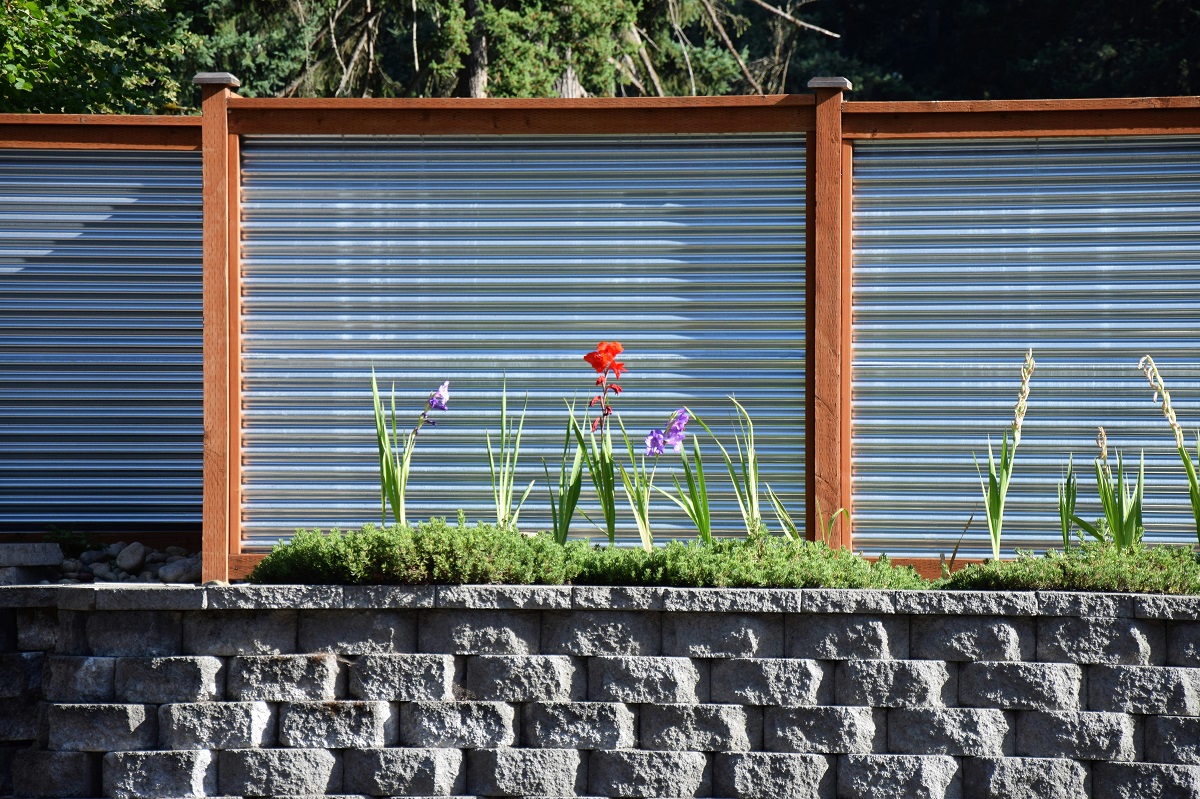
Not every yard has room for a shelterbelt. Smaller lots, narrow side yards, and modern subdivisions often leave a built barrier as the only realistic choice. The good news is that a well-designed fence or wall can rival a hedge for aerodynamic performance, as long as it respects the same permeability principle.
Louvered fences, with angled slats that break up airflow, are the top-performing built option for most residential sites. Lattice-topped privacy fences come in second, since the open lattice section bleeds off pressure that would otherwise spill over the top as turbulence. Solid masonry walls look permanent and feel protective, but they create the worst downwind conditions unless paired with planting on the sheltered side to catch the descending air.
Here is how common built options stack up:
- Louvered cedar or composite fence: strong performance, moderate cost, 20 to 30 year lifespan.
- Lattice-topped privacy fence: good performance, lower cost, 15 to 20 year lifespan.
- Slatted horizontal board fence with gaps: good performance when gaps are 10 to 15 percent of board width.
- Masonry or stucco wall: poor aerodynamic performance alone, excellent when combined with front-side shrubs.
- Woven willow or reed panels: decent short-term performance, 5 to 10 year lifespan.
Combining Living And Built Elements
The strongest residential windbreaks almost always mix the two. A louvered fence provides day-one shelter while a row of young evergreens grows behind it. Ten years later, the trees carry the main load and the fence becomes backup. Fifteen years in, the fence can be removed or replaced without losing protection.
This hybrid approach also solves the ugliest phase of any planting: the first five years, when saplings look like twigs and provide almost no shelter. A built barrier bridges that gap and takes pressure off young root systems while they establish.
Site Assessment Before You Install Anything
Before buying a single plant or fence panel, spend time watching your yard during actual windy weather. Note which direction the strongest gusts come from, where leaves pile up, and which plants currently show the most damage. Prevailing wind is rarely a perfect compass direction, and local features like neighboring houses, hills, and tree lines steer airflow in ways no regional map can predict.
A few questions worth answering before installation:
- Which direction do the damaging winds come from most often, and does that change by season?
- How much horizontal space can you dedicate without crowding structures or utility lines?
- Are there buried utilities, septic fields, or easements that limit where roots can grow?
- Does the site drain well, or will new plantings sit in waterlogged soil each spring?
- How close is the nearest building, and will mature trees eventually threaten the roof or foundation?
Spacing between barriers matters too. If your property is large enough to need two parallel windbreaks, place them no farther apart than 20 times the height of the first row. Beyond that distance, wind speed recovers enough to resume causing damage before the second barrier kicks in.
Maintenance Over the Long Haul
A windbreak is not a set-it-and-forget-it project, even once it matures. Living barriers need periodic thinning to keep interior branches alive, replacement planting when individual trees die, and watering during droughts for the first several years. Built barriers need stain, hardware checks, and inspection after every major storm.
The payoff is that a maintained windbreak only gets better with age. Trees grow taller and denser. Fences, if cared for, continue filtering gusts for decades. Compare that to the yearly scramble of staking, wrapping, and praying that defines unprotected gardens, and the time spent on upkeep looks like a bargain.
Final Thoughts
Permanent windbreaks reward patience and planning more than any other garden project. The yard that feels exposed and battered today can, with the right combination of trees, shrubs, and smart structural choices, become a sheltered pocket where tender plants thrive and storms pass by without leaving a mess. The key is matching the barrier to the site, respecting the aerodynamic rules that make semi-permeable designs outperform solid ones, and giving living elements the years they need to reach full strength.
Whether you choose a classic multi-row shelterbelt, a modern louvered fence, or a hybrid of both, the underlying goal is the same: slow the wind without stopping it, cover enough length to prevent end-gusts, and build in redundancy so one failure does not undo the whole system. Done well, a windbreak quietly protects everything downwind of it through every season, year after year.
Start with a careful look at how wind actually moves across your property, pick an approach that fits your space and timeline, and commit to the maintenance that keeps it working. The gardens that survive the worst weather are rarely the luckiest ones. They are the ones whose owners planned for the wind long before it arrived.
About the Author